 Back
Back

Marina Chain Unveils Voluntary Carbon Credit Platform and Maritime Decarbonization Vision at BWB 2022
Decarbonizing Traditional Industries at BWB 2022: Presenting a Vision for Blockchain-Based Voluntary Carbon Credit Platform
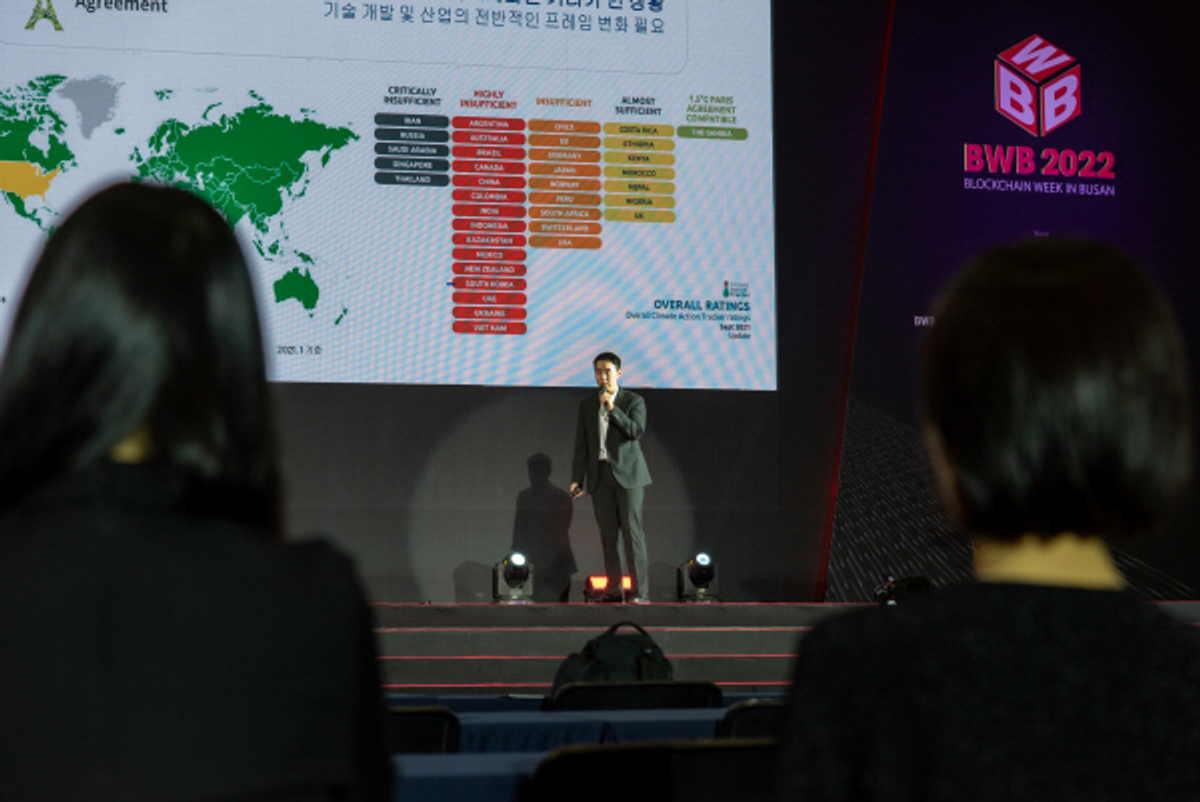
As Blockchain Week in Busan 2022 (BWB 2022)—which opened on the 27th—came to a close on the 29th, blockchain-based platform company Marina Chain has been drawing significant attention.
MarinaChain CEO Seong-yeop Ha delivered a presentation titled "Global Carbon Neutrality Trends and the Current State of Carbon Credits" at BWB 2022 on the 28th. Ha noted, "While the world is making efforts toward decarbonization, reducing carbon emissions is no easy task, and traditional industries such as manufacturing, shipping, and aviation—which must continue using fossil fuels—currently lack immediate alternatives," adding, "Consequently, the value of carbon credits is rising."
A carbon credit is a certificate granting the right to emit one ton of carbon dioxide in exchange for removing an equivalent amount. Companies can improve the environmental aspect of their ESG evaluations by purchasing carbon credits, leading to a situation where demand far exceeds supply.
Ha explained, "To address current issues in the carbon credit market—such as double counting, lack of price transparency, and lack of transaction transparency—MarinaChain is leveraging blockchain technology to store data and enhance efficiency and reliability in carbon credit trading."
MarinaChain is a startup founded in Singapore in 2020 by alumni of Korea Maritime & Ocean University, building a voluntary carbon market platform. Recently, the company signed an MOU with Singapore's CIX, Asia's first carbon credit exchange. In Singapore, the world's largest transshipment port, MarinaChain has partnered with 14 shipping companies and collected over 200 sets of vessel data, while also securing investments from leading global shipping lines.
Ha stated, "Unlike compliance carbon markets regulated by governments, the voluntary carbon market—where companies and individuals can voluntarily reduce carbon emissions and trade offsets—has boundless growth potential," adding, "We also plan to cooperate with Busan City to build a global blockchain city and industrial ecosystem." He further remarked, "Overseas, platforms led by companies and non-profits such as Gold Standard, Verra, Puro.earth, and Nori are actively thriving, but Korea's voluntary carbon market remains in its infancy."
Meanwhile, with developed countries adopting the Glasgow Climate Pact at last year's 26th UN Climate Change Conference of the Parties (COP26) to double climate change adaptation funding by 2025, projections suggest that the voluntary carbon market will grow into a $100 billion market.
Source : https://www.kookje.co.kr/news2011/asp/newsbody.asp?key=20221029.99099007928
MarinaChain
Continue Reading
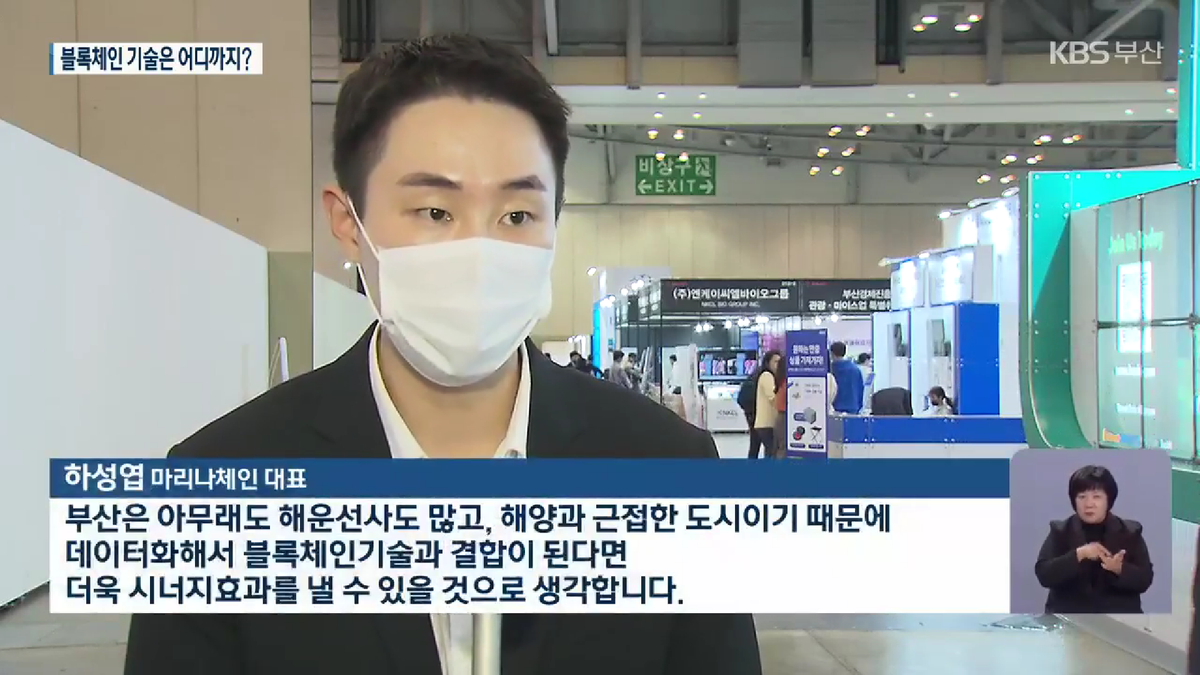
MarinaChain Presents Vision for Maritime Blockchain and Fractional Vessel Investment in KBS News Interview

MarinaChain
October 28, 2022 · 3 years ago
MarinaChain Presents Vision for Maritime Blockchain and Fractional Vessel Investment in KBS News Interview
MarinaChain
October 28, 2022 · 3 years ago
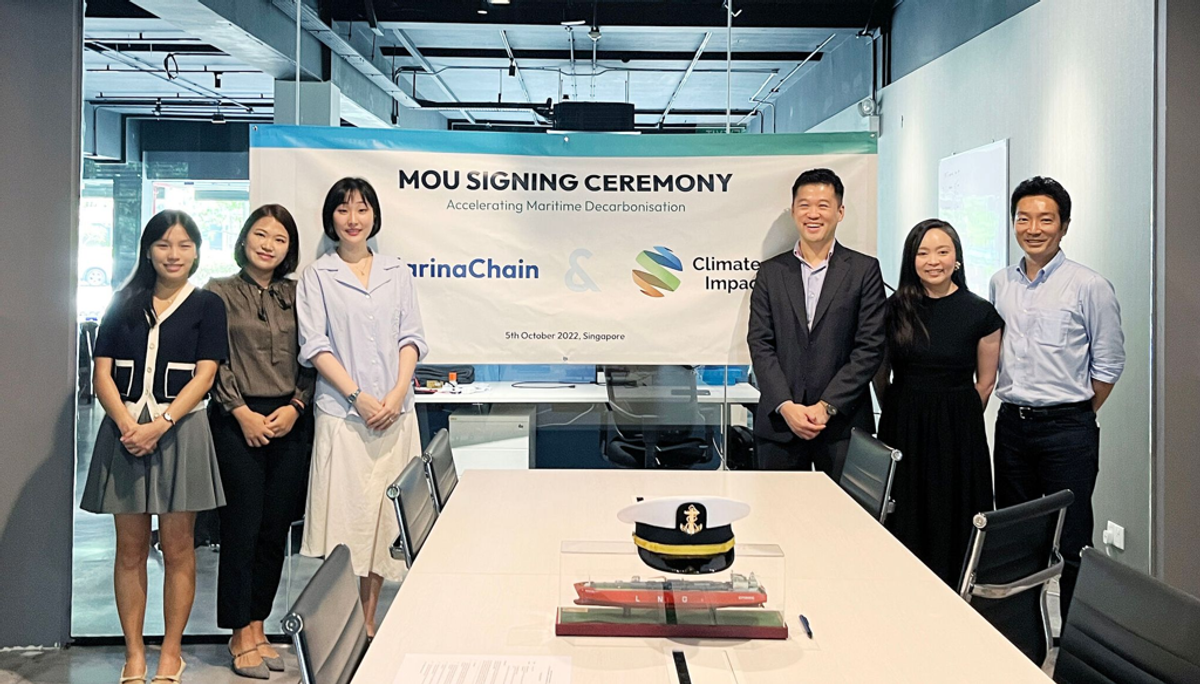
MarinaChain Signs MOU with Global Carbon Exchange CIX for Maritime Decarbonisation
MarinaChain
October 25, 2022 · 3 years ago
MarinaChain Signs MOU with Global Carbon Exchange CIX for Maritime Decarbonisation
MarinaChain
October 25, 2022 · 3 years ago