 Back
Back

MarinaChain Outlines Maritime Carbon Compliance Strategy and 'MarinaNet & MarinaX' Vision in Block Media Interview
MarinaChain Highlights Tailored Solutions for Tightening IMO and EU ETS Maritime Regulations in Block Media Interview
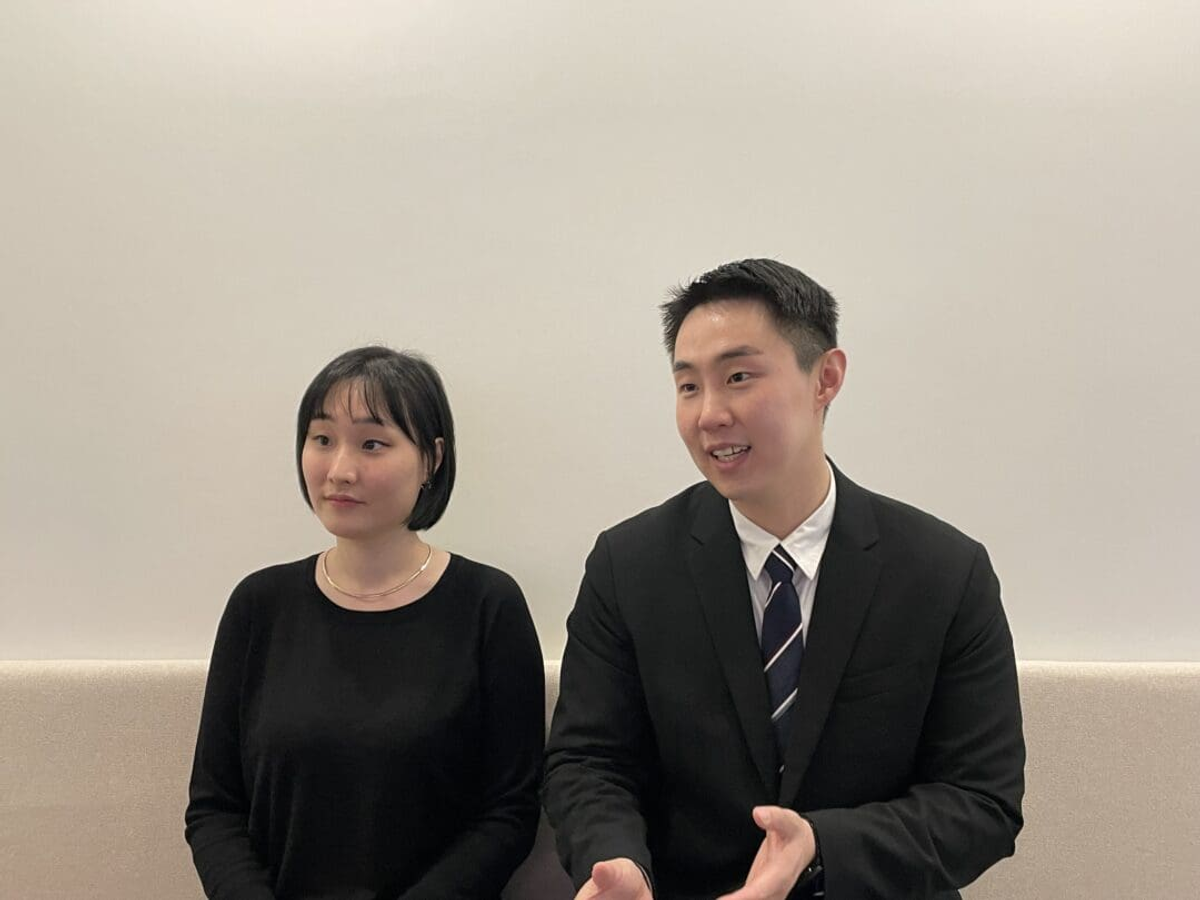
Block Media initiates a new year special interview series for 2023, meeting with promising companies, startups, and project leaders in the digital asset and blockchain technology markets to explore their achievements and hear their visions.
The first guest in this series is Seong-yeop Ha, CEO of MarinaChain. Marina Chain is targeting the 'maritime carbon credit' market.
MarinaChain CEO Seong-yeop Ha: "Maritime Carbon Credit Trading, Solved Through Us"
MarinaChain CEO Seong-yeop Ha and CVO Da-won Kim are young entrepreneurs with deep expertise in maritime-related business and the NFT market.
MarinaChain won 2nd place at the BlockFesta 2022 'Web3 Startup Pitching Contest.' Marina Chain received high ratings at the contest for its deep domain knowledge in the eco-friendly vessel blockchain industry. The interview took place last month at the permanent NFT exhibition space 'Uncommon Gallery.'
Q. What kind of project is MarinaChain?
MarinaChain is a Singapore-based company providing maritime carbon emissions compliance solutions. By offering Web2 and Web3-based solutions, we enable shipping companies—which have struggled with calculating carbon emissions—to easily prepare for carbon regulations.
The International Maritime Organization (IMO), a UN agency, has set a mid-to-long-term goal to reduce carbon emissions by 50% compared to 2008 levels by 2050. Until now, hull design and engine fuel efficiency improvements reduced carbon emissions by about 10–20%, but new regulations starting in January 2023 require shipping companies to make direct efforts to reduce carbon emissions. Current reports estimate that vessel retrofits alone will require approximately $1.4 trillion to $1.9 trillion. Vessel retrofitting demands high costs, and clear alternative fuels are not yet ready. MarinaChain views purchasing 'carbon credits' as the only immediate way to respond to carbon reduction regulations.
A carbon credit is a certificate granting the right to emit 1 metric ton of carbon dioxide or an equivalent amount of other greenhouse gases, which can be traded between companies and comes in various types. Carbon credits are divided into 'Compliance Carbon Certificates (CCC),' issued and granted by governments, and 'Voluntary Carbon Certificates (VCC),' obtained through voluntary greenhouse gas reduction activities by the private sector. Voluntary carbon credit trading accounts for 80% of global carbon credit trading volume. Building a structured trading system allows everyone from corporations to the general public to easily buy and sell carbon credits. MarinaChain is starting with voluntary carbon credits, where a wide variety of market participants can join.
Most shipping companies have simply collected massive amounts of data generated during vessel operations without processing it. There are also no guidelines for submitting data to prove carbon reduction contributions, such as lowering engine temperatures. Companies must process all data generated by main engines, including temperature and pressure, to demonstrate their contribution to carbon reduction, but standardized guidelines for that data do not exist.
Above all, proving fuel consumption reduction is the most important factor. Currently, crew members on board record daily fuel consumption manually every day at noon.
Q. Could you explain the project in more detail?
We have two main products: MarinaNet and MarinaX. MarinaNet is a web platform that manages and analyzes vessel operational data and tracks carbon emissions. MarinaX is a blockchain-based carbon credit platform. MarinaNet monitors vessel emissions and generates IMO-compliant reports. If a vessel fails to meet IMO regulations, it can purchase carbon credits through MarinaX.
MarinaX is a trading platform where retail investors, green projects, and shipping companies can sell and buy carbon credits, utilizing MarinaToken (MRN) as its utility token.
Ships are currently not subject to global carbon credit regulations. However, the EU was the first to announce that it would include shipping in the EU ETS, and discussions are ongoing at the IMO as well. When relevant regulations are applied to ships in the future, we can expect significant synergy between the two platforms.
Rather than utilizing specialized blockchain technologies like COOV or DeFi, MarinaChain focuses on combining blockchain technology with real-world industry. We use blockchain technology for secure data storage and for turning carbon credits into NFTs. COOV is the world's first blockchain-based COVID-19 vaccination verification system created by the Korea Disease Control and Prevention Agency.
Q. MarinaChain was praised at the BlockFesta 2022 Pitching Contest for its deep knowledge of the eco-friendly vessel blockchain industry.
CEO Seong-yeop Ha: That is correct. While there are many eco-friendly projects combining blockchain, many companies lack a concrete business plan. MarinaChain has a clear business plan that connects 'eco-friendly tech,' 'blockchain,' and the 'existing maritime industry.' Furthermore, based on a deep understanding of shipping, MarinaChain possesses maritime industry expertise. As the IMO's 2050 greenhouse gas reduction targets tighten starting next January, many shipping companies lack response measures. Marina Chain can assist in this area.
Starting in January 2022, under IMO regulations, shipping companies must submit Carbon Intensity Indicator (CII) ratings. If a vessel classified under carbon intensity efficiency standards fails to improve its rating within the deadline, vessel operation becomes impossible.
Q. What expertise do CEO Seong-yeop Ha and CVO Da-won Kim have in the shipping industry?
CEO Seong-yeop Ha: I majored in eco-friendly shipping at Korea Maritime & Ocean University. Working at a shipping company allowed me to understand the existing problems of the maritime industry firsthand as an insider. When I surveyed the market to start a business in shipping, I found it difficult for young founders. In the meantime, the emergence of blockchain technology and eco-friendly regulations came to the fore, and I was able to apply them to the shipping industry.
CVO Da-won Kim: I majored in art at Central Saint Martins in the UK and have experience selling NFTs since 2021. While running NFT projects, I had extensive interactions with blockchain developers. In addition, because my family works in the shipping industry, I was able to identify existing industry problems more easily than others. I thought creating business synergies by connecting blockchain and shipping would produce strong results.
Q. Why did MarinaChain choose the Polygon network?
CVO Da-won Kim: Compared to other networks, we thought Polygon was the network we could use most stably. We also considered Solana, but determined that Polygon had a more active NFT market. We also considered that Polygon is executing enterprise-friendly policies such as Supernets.
Polygon is an Ethereum sidechain platform. The Supernet chain is a network that allows projects using Polygon to run applications without additional hosting or operational costs.
Q. What is the difference between the overseas blockchain market and the domestic blockchain market?
CEO Seong-yeop Ha: Singapore is a business-friendly country where company operations are smooth in terms of legal and administrative aspects, so many companies maintain Singapore branches. Therefore, there are many opportunities to network with various exchanges, and there are many Web3 companies.
It is difficult to speak about the differences because we did not conduct the project in Korea.
CVO Da-won Kim: Especially in the case of carbon credits, they are not generated in Korea, so they must be brought in from abroad. We purchase them from sellers through Singapore's CIX. In the case of the shipping industry, the central hubs are Europe and the US, so following European directions is also important.
Q. The shipping industry is famous for being conservative. Were there any difficulties introducing blockchain, a new technology, to a conservative shipping industry?
In initial meetings with shipping companies, we spent a lot of time explaining blockchain. However, responses varied depending on individual interest in blockchain. So we changed our strategy.
In the shipping industry, digital adoption is slower than in other industries. Therefore, in meetings with shipping companies, we did not explain Web2 and Web3 technologies, but focused instead on the difficulties and solutions faced by the shipping companies. We had to provide 'solutions' tailored to shipping companies without being limited to technology.
When applying blockchain technology, we explained it by comparing it to real-life applications rather than technical concepts. For example, we explained that purchasing MarinaTokens provides points like Naver Points, and issuing certificates means storing them in a safe place.
Ultimately, we hope blockchain technology becomes applied to real life so seamlessly that coins are not called coins and wallets are not called wallets.1
Q. Is your business model applicable not only to shipping but also to other logistics industries?
Yes. Approximately 97% of global cargo volume moves by ship. After ships arrive at each port, distribution methods may vary depending on national infrastructure or characteristics, but we believe it can cover the overall distribution system. We are designing future expansions with land and air freight transport in mind.
Q. Please share your thoughts on participating in the BlockFesta 2022 Web3 Pitching Contest.
The judges' questions were sharp. I could feel their depth of experience through their questions. In MarinaChain's case, we had a lot of experience preparing answers for various VCs. If our preparation had been insufficient, we would not have achieved good results. It was also great that Block Media created an opportunity to interact with domestic Web3 companies.
Block Media is Korea's first media outlet specializing in blockchain and digital asset markets, hosting the BlockFesta conference annually. At BlockFesta 2022, under the theme 'Spring of Web3,' time was spent discussing preparations for innovation with experts. As part of BlockFesta 2022, Block Media held the Web3 Startup Pitching Contest on December 2 last year at the Uprise Lounge in Gangnam-gu, Seoul.
MarinaChain
Continue Reading
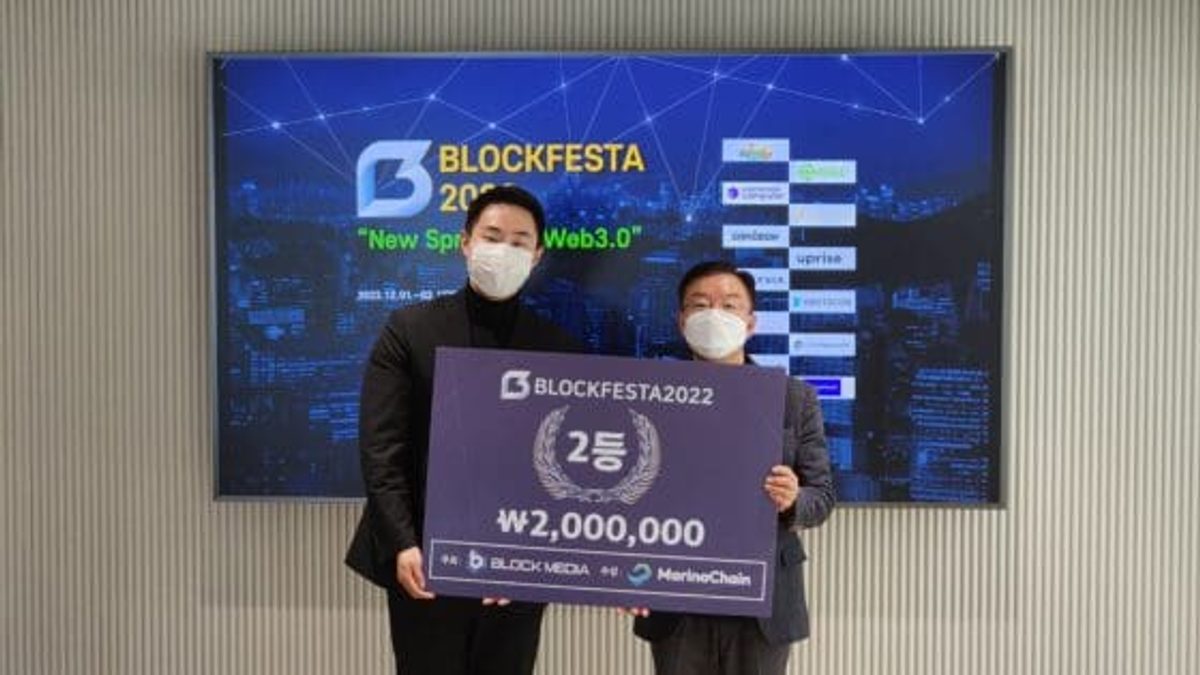
MarinaChain Wins Second Place at 'Blockfesta 2022' Startup Pitch Competition Hosted by Block Media

MarinaChain
December 14, 2022 · 3 years ago
MarinaChain Wins Second Place at 'Blockfesta 2022' Startup Pitch Competition Hosted by Block Media
MarinaChain
December 14, 2022 · 3 years ago
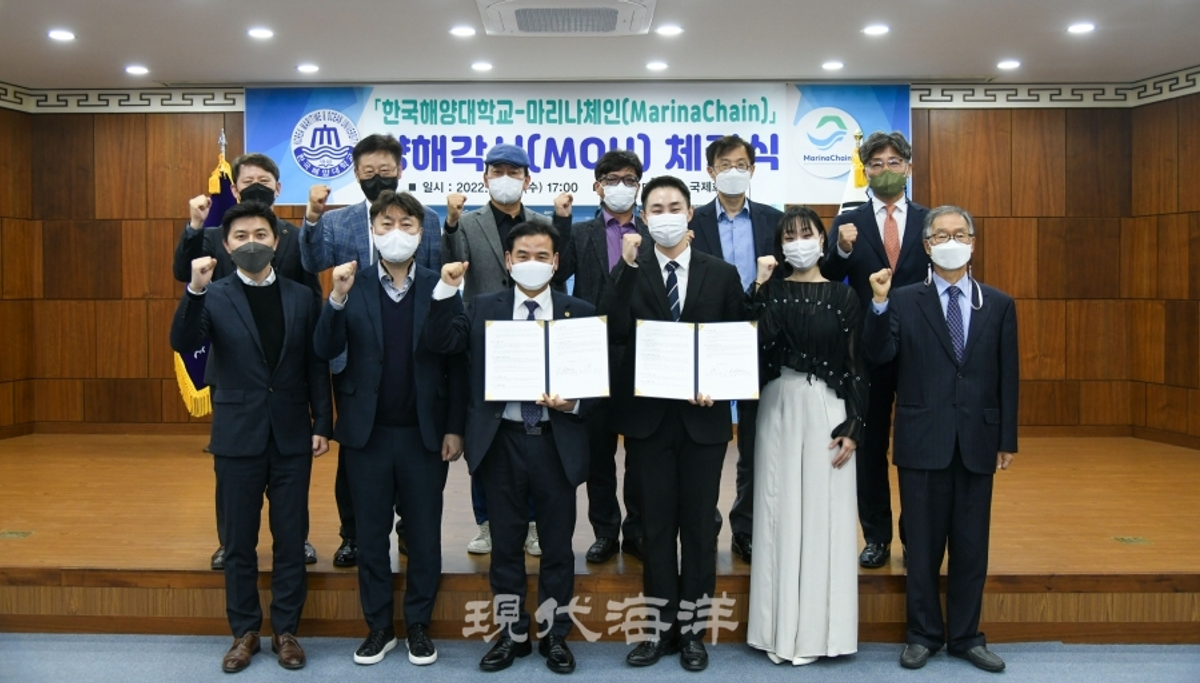
MarinaChain Signs MOU with Korea National Maritime & Ocean University for Eco-Friendly Maritime Blockchain Data Partnership
MarinaChain
November 10, 2022 · 3 years ago
MarinaChain Signs MOU with Korea National Maritime & Ocean University for Eco-Friendly Maritime Blockchain Data Partnership
MarinaChain
November 10, 2022 · 3 years ago